Work From Home Jobs A Complete Guide to Finding Legitimate Remote Work in 2026
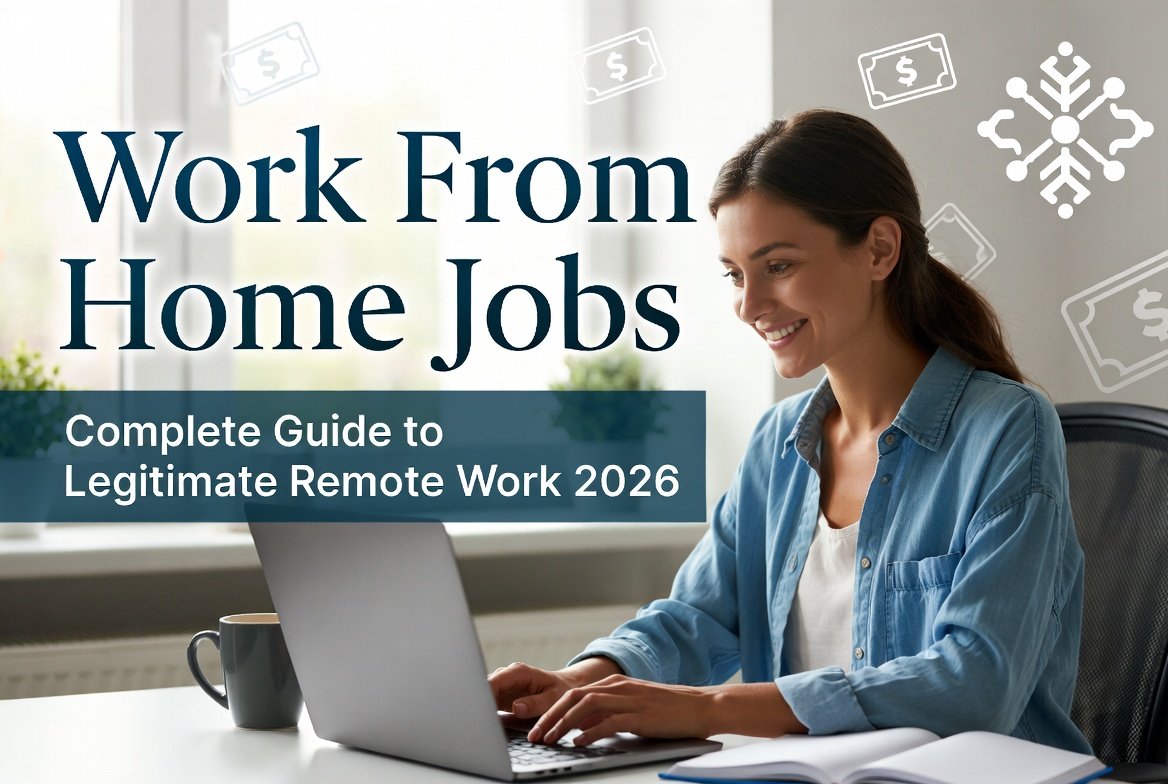
Work From Home Jobs
A few years ago, working from the kitchen table or a small desk at home sounded unusual. Today, it has become a normal way for millions of people to earn an income, build a career, or make some extra money without travelling to an office every morning. I have seen many job seekers start with a simple laptop, basic skills, and a willingness to learn—and gradually turn remote work into a serious career.
That is why work from home jobs have become such a popular search for students, parents, freelancers, experienced professionals, and people looking for more flexibility in their daily lives.
But there is one important thing to understand: working from home is not the same as getting easy money. Legitimate remote jobs still require skills, patience, good communication, and consistent effort. There are also plenty of misleading job advertisements online, so knowing how to identify genuine opportunities matters.
In this guide, we will look at the best types of remote jobs, skills you can learn, where to search, how to apply, the advantages and disadvantages, and practical ways to avoid common scams.
What Are Work From Home Jobs?
Work from home jobs are positions that allow employees or independent workers to complete their responsibilities from their home instead of travelling to a traditional workplace.
Some companies are fully remote, while others offer hybrid positions where employees work from home for part of the week. Freelancers and contractors may also work remotely for clients located in different cities or countries.
Remote work can be full-time, part-time, temporary, freelance, or project-based.
Common examples include:
- Customer service representative
- Virtual assistant
- Content writer
- Graphic designer
- Web developer
- Social media assistant
- Online tutor
- Bookkeeper
- Data entry specialist
- Sales representative
- Digital marketing assistant
- Video editor
The right option depends on your existing skills, experience, available time, and career goals.
Why Are Work From Home Jobs So Popular?
The biggest attraction is flexibility.
Instead of spending an hour or more travelling to work, you can use that time for family, education, exercise, or simply getting enough rest. For someone living far from major employment centres, remote work can also open doors to companies that would otherwise be difficult to access.
Another advantage is that remote positions can sometimes offer more flexibility around working hours. However, this depends entirely on the employer and the job.
For example, a customer support employee may need to work specific shifts, while a freelance writer might have greater control over when assignments are completed.
Remote work is therefore not automatically flexible. Always read the job description carefully before applying.
Best Work From Home Jobs for Beginners
If you have little professional experience, do not assume that remote work is impossible. Several entry-level roles can be learned with relatively simple skills.
1. Customer Service
Many companies hire remote customer service representatives to answer questions, handle complaints, process requests, and help customers through email, chat, or phone.
Good communication is usually more important than advanced technical knowledge.
2. Virtual Assistant
Virtual assistants help businesses with everyday administrative tasks.
Typical responsibilities include:
- Managing emails
- Scheduling appointments
- Updating spreadsheets
- Organizing files
- Researching information
- Managing simple online tasks
This can be a good starting point for someone who is organized and comfortable using a computer.
3. Content Writing
If you enjoy writing, content creation can become a useful career path.
Businesses need blog posts, product descriptions, website pages, newsletters, social media captions, and other written material.
You do not need to be a professional author on your first day. Strong grammar, research ability, and the willingness to improve are much more important.
4. Online Tutoring
People with strong knowledge of subjects such as English, mathematics, science, or computer skills can explore online tutoring.
Teaching experience can help, but requirements vary depending on the platform and subject.
5. Data Entry
Data entry involves entering, updating, or organizing information in digital systems.
It may sound simple, but genuine positions can still require accuracy, concentration, and basic computer skills.
Be especially careful with data-entry advertisements that promise unusually high earnings for almost no work.
Work From Home Jobs for Skilled Professionals
Experienced workers have even more possibilities.
Web Development
Developers can build websites, web applications, and other digital products from almost anywhere with a reliable internet connection.
Popular skills include HTML, CSS, JavaScript, Python, PHP, and various modern development frameworks.
Graphic Design
Companies constantly need visual content for websites, advertisements, social media, presentations, and branding.
Designers commonly use tools such as Adobe Creative Cloud, Canva, Figma, and other design software.
Digital Marketing
Digital marketing includes SEO, social media marketing, email marketing, paid advertising, content marketing, and analytics.
A person with proven results and a good portfolio can potentially work with businesses in different markets.
Bookkeeping and Accounting
Businesses often need professionals to manage invoices, expenses, financial records, payroll information, and other administrative financial tasks.
Relevant qualifications and experience can be important for these roles.
Video Editing
The growth of online video has created demand for editors who can turn raw footage into polished videos for businesses, creators, educational projects, and marketing campaigns.
A strong portfolio can be more useful than simply saying you know how to edit videos.
Work From Home Jobs: Quick Comparison
| Job | Beginner Friendly | Main Skill | Typical Work Style |
|---|---|---|---|
| Customer Service | Yes | Communication | Full/Part-time |
| Virtual Assistant | Yes | Organization | Part-time/Freelance |
| Content Writer | Yes | Writing | Freelance/Remote |
| Online Tutor | Sometimes | Teaching | Part-time |
| Data Entry | Yes | Accuracy | Part-time/Contract |
| Graphic Designer | With training | Design | Freelance/Remote |
| Web Developer | With training | Coding | Full-time/Freelance |
| Digital Marketer | With training | Marketing | Full-time/Freelance |
| Video Editor | With training | Editing | Freelance/Remote |
The table is only a starting point. Job requirements and pay vary significantly between employers, industries, experience levels, and locations.
How to Find Legitimate Work From Home Jobs
Finding a remote job is easier when you approach the process like a normal career search instead of looking for quick money.
Step 1: Identify Your Existing Skills
Before searching, make a list of what you can already do.
For example:
- Good English communication
- Microsoft Office
- Customer support
- Writing
- Graphic design
- Excel
- Social media
- Accounting
- Programming
- Video editing
You may discover that you already have a skill that employers are looking for.
Step 2: Choose One Job Category
A common mistake is applying for every remote job you see.
Instead, choose one or two categories that match your abilities.
If you are good at communication, customer service could be a logical choice. If you enjoy writing, explore content-related roles. If you have technical knowledge, look at development or IT positions.
A focused search usually makes it easier to improve your CV and applications.
Step 3: Prepare a Professional CV
Your CV should quickly explain who you are, what you can do, and what experience you have.
For remote positions, highlight skills such as:
- Communication
- Time management
- Computer skills
- Independent working
- Problem-solving
- Collaboration
- Relevant software knowledge
Do not fill your CV with skills you cannot actually demonstrate.
Step 4: Build a Portfolio
A portfolio can make a major difference for freelance and creative work.
For example, a beginner writer could create three sample articles. A designer could prepare several sample graphics. A video editor could create short demonstration projects.
You do not always need paid experience to demonstrate ability.
Step 5: Search on Reliable Job Platforms
Use established job boards, professional networks, company career pages, and reputable freelance platforms.
When you find an interesting vacancy, check:
- Who is the employer?
- Is the company website available?
- Does the job description explain the responsibilities?
- Are the requirements realistic?
- Is the application process professional?
- Does the company provide verifiable contact information?
If something feels suspicious, research it before providing personal information.
How to Avoid Work From Home Job Scams
Unfortunately, not every remote job advertisement is genuine.
One of the biggest warning signs is a request for money before you can start working. Be cautious if someone asks you to pay an application fee, training fee, equipment deposit, or “registration charge” simply to receive a job.
Other warning signs include:
- Guaranteed large earnings with no experience
- Pressure to make a quick payment
- Requests for unnecessary financial information
- Poorly written job advertisements
- Unverifiable company information
- Recruiters using suspicious email addresses
- Requests to move immediately to private messaging apps
- Promises of easy income for almost no work
A legitimate employer may ask for information during a normal hiring process, but you should understand why the information is required and who is requesting it.
If a job sounds too good to be true, slow down and investigate.
Pros and Cons of Working From Home
Like any career arrangement, remote work has both advantages and disadvantages.
Pros
No daily commute: You can save commuting time and transportation costs.
More flexibility: Some remote positions provide flexible schedules.
Comfort: You can create a workspace that suits you.
Wider opportunities: You may apply to companies outside your local area.
Better routine: For some people, remote work makes it easier to balance work and personal responsibilities.
Cons
Distractions: Family, social media, household tasks, and other distractions can reduce productivity.
Isolation: Working alone every day may feel lonely for some people.
Internet problems: A poor connection can interrupt meetings and deadlines.
Less separation: When your home becomes your workplace, switching off after work can be difficult.
Self-discipline: Nobody may be standing beside you reminding you what needs to be completed.
The solution is to create boundaries. Set working hours, keep a dedicated workspace if possible, and take regular breaks.
How to Build a Successful Remote Career
Getting your first remote position is only the beginning.
Treat your work seriously even if you are sitting at home in comfortable clothes.
Keep your deadlines. Reply to messages professionally. Attend meetings on time. Ask questions when something is unclear. Most importantly, deliver the work you promised.
You should also continue learning.
Technology and workplace expectations change quickly. A skill that is valuable today may become less competitive tomorrow. Spend some time each month improving your knowledge or learning a related skill.
For example, a virtual assistant could learn basic bookkeeping. A writer could learn SEO. A customer service worker could develop technical support skills.
Small improvements can make your professional profile stronger over time.
A Simple Daily Routine for Remote Workers
Having a routine can make remote work much easier.
Try something like this:
8:00 AM: Start the workday and review priorities.
8:15 AM: Begin the most important task.
10:30 AM: Take a short break.
10:45 AM: Continue focused work.
1:00 PM: Lunch and proper rest.
2:00 PM: Meetings, emails, or smaller tasks.
4:00 PM: Review completed work.
5:00 PM: Finish outstanding tasks and plan the next day.
Your actual schedule may look completely different. The point is to create a routine that prevents work from taking over the entire day.
Are Work From Home Jobs Good for Everyone?
Not necessarily.
Some people love remote work because they prefer independence and quiet environments. Others perform better in an office where they can communicate with colleagues face-to-face.
Remote work may be a good fit if you can manage your time, communicate clearly, stay motivated, and complete tasks without constant supervision.
If you need frequent interaction with colleagues or struggle to stay productive without a structured environment, you may need to create stronger routines or consider hybrid work.
Frequently Asked Questions
1. Can I find work from home jobs with no experience?
Yes. Entry-level roles such as customer service, virtual assistance, tutoring, and some administrative positions may accept beginners. However, you should still have useful skills and be prepared to learn.
2. Do I need a university degree for remote work?
Not always. Some professional positions require degrees or certifications, but many employers focus heavily on practical skills and experience. The requirements depend on the specific position.
3. Can students do work from home jobs?
Yes. Students can explore part-time, freelance, tutoring, writing, design, and other flexible opportunities, depending on their skills and schedule.
4. How can I tell if a remote job is legitimate?
Research the employer, check its official website and professional presence, read the job description carefully, and avoid opportunities that require suspicious upfront payments or promise unrealistic earnings.
5. What equipment do I need for remote work?
It depends on the job. A reliable computer, stable internet connection, suitable software, and a quiet workspace are common requirements. Some employers provide equipment, while others expect workers to provide their own.
Final Thoughts on Work From Home Jobs
The world of work from home jobs offers genuine opportunities, but it is important to approach it with realistic expectations. You probably will not find a legitimate job that makes you rich overnight, and you should be suspicious of anyone promising exactly that.
Instead, focus on something much more dependable: building a useful skill and becoming good at it.
Start with the abilities you already have. Improve your CV, create a few portfolio samples, search reputable job sources, and apply consistently. If you are starting from zero, give yourself time to learn. Your first opportunity may not be your dream job, and that is perfectly normal.
The biggest advantage of remote work is not simply sitting at home. It is the possibility of building a career around your skills while accessing opportunities that may not exist in your local area.
So, choose one skill today, improve it, and start looking for suitable opportunities. Your remote career can begin with one application, one client, or even one small project—but the important part is taking that first genuine step.