NHS Jobs 2026 Complete Guide to Finding and Applying for NHS Jobs in the UK
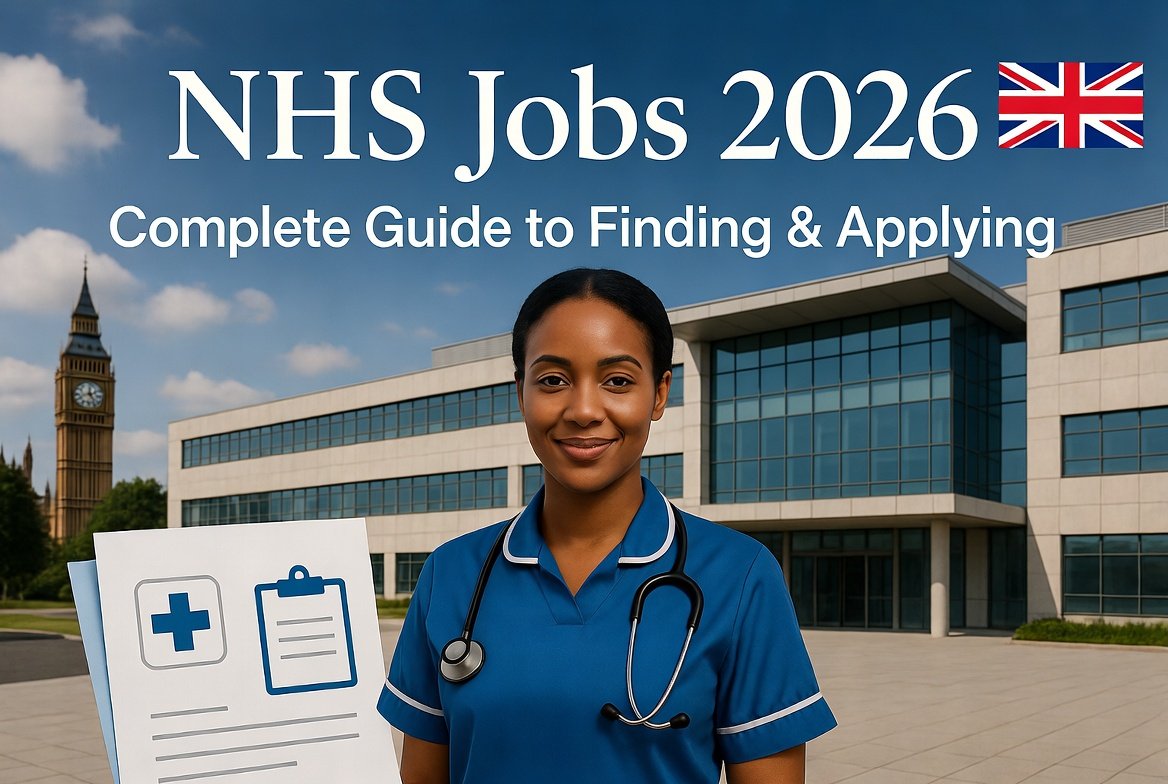
NHS Jobs 2026
The first time you look through NHS jobs, it can feel like there are too many options. You might see nursing vacancies beside administration roles, healthcare assistants, IT positions, cleaners, laboratory jobs and dozens of other careers. The good news is that you do not have to be a doctor or nurse to build a career in the NHS.
The NHS is one of the UK’s biggest employers, and its official recruitment service covers hundreds of different job types. NHSBSA says NHS Jobs had around 35,000 jobs posted each month during 2025/26, showing just how large the recruitment market is. (NHSBSA)
Whether you are already living in Britain, changing careers, a recent graduate or an overseas professional hoping to work in the UK, understanding how NHS recruitment works can save you a lot of time.
This guide explains where to find vacancies, which roles are available, how applications work, what employers look for, and some important mistakes to avoid.
What Are NHS Jobs?
NHS jobs are vacancies advertised by organisations that form part of the UK’s National Health Service. These include NHS trusts, hospitals, GP services, community healthcare organisations and other NHS employers.
One thing that surprises many new applicants is the sheer variety of careers available. NHS England highlights areas including nursing and midwifery, medical and dental roles, allied health professions, health science services, support services, administration and IT. (NHS England)
You can therefore find opportunities for people with very different qualifications and backgrounds.
For example, someone with a clinical qualification might apply for a nursing position, while someone with office experience could look at an administrator or medical secretary vacancy.
The official NHS Jobs service is particularly useful because you can search vacancies by keywords, location and other criteria instead of visiting individual hospital websites one by one.
Search NHS Jobs on the official website
Types of NHS Jobs You Can Apply For
Before searching, it helps to understand the main categories. Not every NHS role requires a university degree or professional registration.
1. Nursing and Midwifery
Nursing remains one of the most recognised NHS career paths. Vacancies can include registered nurses, specialist nurses, nursing associates and other nursing positions.
Requirements depend on the specific role. Registered positions normally require the relevant professional registration.
2. Healthcare Support Worker Jobs
Healthcare support workers assist patients and clinical teams with day-to-day care. Depending on the position, duties can include supporting patients, helping with personal care, recording information and assisting healthcare professionals.
These roles can be a useful starting point for people who want to understand healthcare work before progressing further.
3. Administrative and Clerical Roles
The NHS also needs people who can keep services organised.
Common examples include:
- Medical receptionist
- Administrative assistant
- Medical secretary
- Patient services administrator
- Booking coordinator
- Data administrator
- Office manager
For some applicants, these positions can be a more realistic entry point than clinical jobs.
4. Allied Health Professions
Allied health careers cover a wide range of specialist healthcare professions, including physiotherapy, radiography, occupational therapy and other areas.
Professional registration and specific qualifications may be required depending on the position.
5. IT and Digital Careers
Modern healthcare depends heavily on technology, so NHS organisations also recruit software, data, cybersecurity, infrastructure and digital professionals.
If your background is in technology, do not assume that healthcare is the only department worth searching.
6. Facilities and Support Services
Hospitals need many people behind the scenes.
Depending on the organisation, you may find vacancies in:
- Cleaning
- Catering
- Portering
- Maintenance
- Estates
- Security
- Transport
- Domestic services
These roles are an important part of keeping hospitals and healthcare services operating every day.
Where to Find NHS Jobs
The best place to start is the official NHS Jobs recruitment service. NHS England specifically directs job seekers to NHS Jobs when looking for vacancies. (NHS England)
You can search using a job title, skill, location or other keywords. The service also allows applicants to manage applications and save searches. (NHSBSA)
Visit the official NHS Jobs website
You can also explore NHS careers if you are unsure what type of position matches your education and interests. NHS England says its Health Careers service covers more than 350 careers. (NHS England)
A useful strategy is to search using several related terms rather than one job title.
For example, instead of searching only for “administrator”, try:
- NHS administrator
- healthcare administrator
- medical secretary
- patient services
- clinical administrator
- hospital receptionist
This can uncover vacancies you might otherwise miss.
Who Can Apply for NHS Jobs?
There is no single eligibility rule for every NHS vacancy.
Each job advertisement normally explains the qualifications, experience, registration and other requirements needed for that specific position.
This is why reading the person specification is so important.
A vacancy might list requirements under headings such as:
- Essential qualifications
- Desirable qualifications
- Essential experience
- Knowledge
- Skills
- Professional registration
Do not automatically reject yourself because you do not have every desirable requirement. Focus first on the essential criteria.
For example, if a job asks for previous administrative experience as an essential requirement but says NHS experience is desirable, someone with strong experience outside the NHS may still have a reasonable case.
How to Apply for NHS Jobs: Step-by-Step
Applying for NHS jobs is not difficult, but rushing through the application can hurt your chances.
Step 1: Create an NHS Jobs Account
If you want to apply through the service, you need an account. NHSBSA confirms that applicants without an NHS Jobs account must create one before starting an application. (NHSBSA FAQ)
Use an email address you check regularly because recruitment communication can be important.
Step 2: Search for Suitable Vacancies
Enter your preferred job title, location or keyword.
Do not apply to every vacancy you see. Instead, spend a little time finding roles that genuinely match your qualifications and experience.
Step 3: Read the Job Description Carefully
Look beyond the job title.
Read the responsibilities and ask yourself:
- What will I actually do each day?
- Do I meet the essential requirements?
- Is professional registration needed?
- Does the employer require previous experience?
- Is the position full-time, part-time or temporary?
- Is there a closing date?
Step 4: Study the Person Specification
This is arguably one of the most important parts of the application.
If the employer says communication skills are essential, give an actual example showing how you have used communication skills.
Instead of writing:
“I have excellent communication skills.”
A stronger approach would be to explain a situation where you dealt with a difficult customer, patient, colleague or member of the public and describe what you did.
Step 5: Prepare Your Supporting Statement
Your supporting statement should connect your experience directly to the requirements of the vacancy.
A simple structure is:
Requirement → Your experience → Example → Result
For instance, if teamwork is required, explain the team situation, your responsibility and the result.
Avoid copying the same generic statement into every application.
One NHS employer specifically advises international applicants to tailor supporting information to each role and use their own words, rather than submitting generic AI-generated statements. (NHS Jobs)
Step 6: Complete Every Section
NHS Jobs applications can contain multiple sections covering areas such as qualifications, training, work history and essential criteria. Official guidance shows that applications need to be completed before they can be submitted. (NHSBSA)
Check everything before pressing submit.
Step 7: Prepare for the Interview
If shortlisted, prepare using the job description and person specification.
Think about examples from your previous work, education, volunteering or other relevant experiences.
A useful method is the STAR technique:
- Situation – What was happening?
- Task – What were you responsible for?
- Action – What did you actually do?
- Result – What happened afterwards?
You do not need to sound like a textbook. Clear, honest answers are usually much easier to follow.
NHS Jobs for International Applicants
If you live outside the UK, the process can involve additional requirements.
International applicants should first establish whether their profession requires UK registration. For example, regulated healthcare professions may require registration with the relevant UK regulator before employment.
Health Careers explains that overseas healthcare professionals may need professional registration as well as permission to work in the UK. (NHS Health Careers)
For registered allied health professions, professional registration can also be a key requirement. (NHS Health Careers)
Visa sponsorship is another issue to check carefully. Not every NHS vacancy automatically offers sponsorship.
If you need immigration sponsorship, read the vacancy carefully and check whether the employer states that sponsorship may be available and whether you meet the current immigration requirements.
Do not pay an unofficial person simply because they promise an NHS job or guaranteed visa.
A genuine application should be based on a real vacancy and official recruitment process.
NHS Jobs for Pakistani and Indian Applicants
Many people from Pakistan, India and other countries search for NHS careers because the NHS has an internationally diverse workforce.
However, overseas applicants should approach the process realistically.
For regulated healthcare positions, you may need to complete professional registration, demonstrate English-language ability where required, and satisfy other professional requirements. Some NHS employers also provide international recruitment guidance for successful candidates. (NUH)
If you are applying from abroad, prepare these areas early:
- Passport and identity documents
- Educational certificates
- Employment references
- Professional registration documents
- English-language evidence where required
- CV and employment history
- Evidence relevant to the vacancy
- Right-to-work or visa information where applicable
Requirements differ by profession and vacancy, so always check the official information rather than relying on social media posts.
How Much Do NHS Jobs Pay?
There is no single NHS salary.
Pay depends on the role, employer, experience, location and applicable pay structure.
Many NHS vacancies display a salary or pay band directly in the advertisement. Read this carefully before applying.
It is also important to look at the complete package rather than focusing only on the headline salary.
Consider:
- Working hours
- Shift patterns
- Annual leave
- Pension arrangements
- Training opportunities
- Career progression
- Contract length
- Location and commuting costs
For someone comparing two similar jobs, these details can make a surprisingly large difference.
Pros and Cons of Working for the NHS
Like any major employer, NHS employment has advantages and challenges.
| Pros | Cons |
|---|---|
| Wide range of career paths | Some roles can be demanding |
| Opportunities for training | Certain jobs involve shift work |
| Strong professional environment | Recruitment can be competitive |
| Jobs across many UK locations | Some positions require registration |
| Potential career progression | Applications can take time |
| Opportunities for different skill levels | Healthcare work may involve emotional pressure |
The NHS can be a great career choice, but it is not an effortless job. Healthcare services can be busy, and some roles require flexibility and resilience.
Knowing this before applying is better than discovering it after accepting an offer.
Common Mistakes to Avoid
Many candidates make avoidable mistakes when applying for NHS vacancies.
Applying Without Reading the Person Specification
A good-looking job title does not mean you are qualified for the role.
Sending the Same Application Everywhere
A generic supporting statement can make it difficult for the hiring team to see why you fit that particular vacancy.
Ignoring the Closing Date
Do not leave applications until the final few hours. Technical problems or missing information can turn into unnecessary stress.
Exaggerating Your Experience
If you have six months of experience, do not describe it as several years. Honest applications are easier to defend during interviews and checks.
Assuming Every NHS Job Offers Sponsorship
This is particularly important for international applicants. Always verify sponsorship information for the actual vacancy.
Paying for a “Guaranteed NHS Job”
Be extremely careful with anyone promising a guaranteed position, interview or visa in exchange for money. Use official recruitment channels and verify employers independently.
Practical Tips to Improve Your NHS Application
If you are serious about getting hired, small improvements can make your application stronger.
1. Keep a master career document.
Maintain your employment dates, qualifications, training courses, certificates and achievements in one place.
2. Save useful examples.
Whenever you solve a problem, help a customer, work within a team or improve a process, write down what happened. These examples can become useful interview answers.
3. Set up job alerts.
The NHS Jobs service allows applicants to save searches and receive information about suitable vacancies. (stepintothenhs.nhs.uk)
4. Apply early.
A vacancy may close when the stated deadline arrives, so avoid waiting until the last moment.
5. Read the advert twice.
The second reading often reveals requirements you missed the first time.
6. Keep your supporting statement specific.
Give evidence rather than filling the page with general claims.
A Simple Example of a Strong Application Approach
Imagine you are applying for an NHS administrator role.
The job requires good communication, organisation and the ability to work with confidential information.
Instead of simply writing:
“I am organised, hardworking and good at communication.”
You could explain that in your previous office role you managed appointment records, communicated with customers by phone and email, handled sensitive information and prioritised urgent requests during busy periods.
That is much more useful to a recruiter because it demonstrates your abilities rather than simply listing them.
The same principle works across many NHS jobs.
Frequently Asked Questions About NHS Jobs
1. Where can I find NHS vacancies?
The official NHS Jobs website is the main place to search for vacancies across NHS organisations in England and Wales. NHS England also directs applicants to NHS Jobs when searching for NHS employment. (NHS England)
2. Can I apply for NHS jobs without medical experience?
Yes. The NHS employs people in many non-clinical areas, including administration, IT, support services, facilities and other roles. However, each vacancy has its own requirements.
3. Can international applicants apply for NHS jobs?
Yes, international candidates can apply for suitable vacancies, but eligibility depends on the role. Healthcare professionals may need UK professional registration, while applicants from outside the UK may also need the appropriate immigration permission. (NHS Health Careers)
4. Do all NHS jobs provide visa sponsorship?
No. Sponsorship should never be assumed. If you need sponsorship, check the individual vacancy and current UK immigration requirements carefully.
5. How can I improve my chances of getting an NHS interview?
Start by applying only for positions where you meet the essential criteria. Then tailor your supporting statement to the person specification, provide specific examples from your experience and carefully check the completed application before submitting it.
Final Thoughts
Finding the right NHS jobs opportunity can take patience. You may apply for one position and hear nothing, then find another vacancy a few weeks later that fits your experience much better. That is normal.
The key is not to treat the process like a numbers game where you send the same CV everywhere. Take time to understand the vacancy, read the person specification, prepare useful examples and explain clearly why your experience matches what the employer needs.
If you are applying from outside the UK, be even more careful. Check registration requirements, right-to-work rules and sponsorship information through official sources before making financial or relocation decisions.
Most importantly, start with the official NHS Jobs service rather than relying on random social media advertisements or unofficial agents.
Start your NHS job search here
There are hundreds of NHS career paths, so if your first search does not produce the right result, do not give up. Try related job titles, broaden your location and keep improving your application.
The right NHS career may not be the first vacancy you see — but with a focused search and a well-prepared application, you give yourself a much better chance of finding it.