Remote Jobs in the UK A Practical Guide to Finding Work From Home in 2026
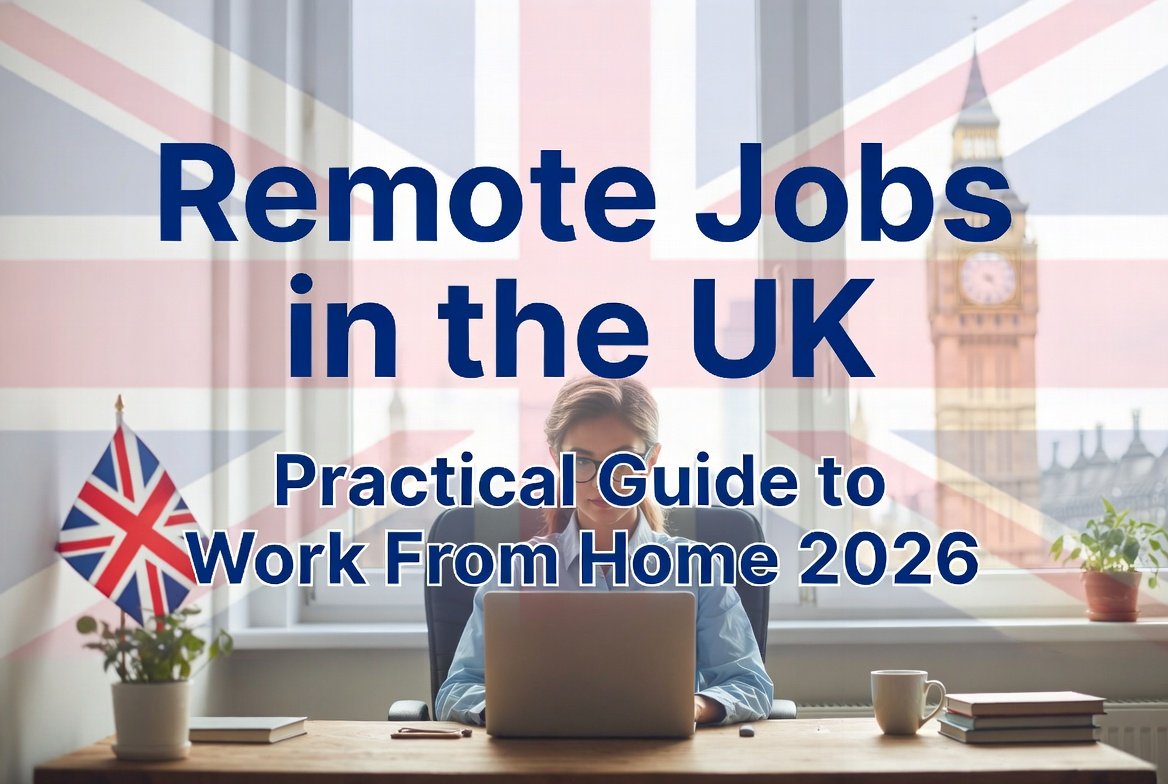
Remote Jobs in the UK A Practical Guide to Finding Work From Home in 2026
A few years ago, working from your kitchen table in the UK might have sounded like a temporary arrangement. Today, for many professionals, it is simply the way they prefer to work.
I have seen plenty of job seekers make the same mistake when searching for remote jobs: they type “work from home” into Google, apply to dozens of random vacancies and then wonder why nobody replies. The problem usually isn’t a lack of opportunities. It is knowing where to look, which roles to target and how to present your skills.
The good news is that remote jobs cover far more than customer service or basic data entry. Depending on your experience, you can find opportunities in technology, administration, sales, marketing, finance, education, design, recruitment and many other areas.
This guide explains how remote work operates in the UK, which roles are worth considering, where to search, how to avoid scams and how to improve your chances of getting hired.
What Are Remote Jobs?
Remote jobs are positions where you can perform your work away from the employer’s usual workplace. In many cases, that means working from your own home using a computer, phone and internet connection.
The UK government describes remote working as working somewhere other than an employee’s usual workplace, including working from home. Hybrid working is slightly different because it combines remote work with time at the usual workplace. (GOV.UK)
You may see several terms while searching:
- Fully remote: You normally work away from the office.
- Work from home: Your home is the primary place of work.
- Hybrid: You divide your time between home and an office.
- Flexible working: Your employer may allow changes to working hours, days or location.
- Remote-first: The company is organised primarily around remote employees.
Don’t assume that every vacancy labelled “remote” means you can work from absolutely anywhere in the world. Some employers require you to live in the UK, work within certain regions or maintain particular working hours.
Always read the job description carefully.
Why Are Remote Jobs Popular in the UK?
The biggest attraction is simple: less commuting.
Imagine spending an hour travelling to work each morning and another hour coming home. That’s roughly ten hours a week that could potentially be used for family, exercise, learning a skill or simply getting some rest.
Remote work can also provide greater flexibility. According to current GOV.UK guidance, employees can request flexible working from their first day, including changes to where they work. Employers can refuse requests for legitimate business reasons, so the right to request does not mean every request must be approved. (GOV.UK)
For employers, remote and flexible arrangements can also widen the pool of people who can apply for vacancies. The UK government currently encourages employers to make flexible arrangements clearer in job adverts. (GOV.UK)
That doesn’t mean every company will offer fully remote work. Some roles genuinely require physical presence, and others may use hybrid arrangements.
Best Remote Jobs to Consider in the UK
One of the most useful things you can do is stop searching only for “remote jobs” and instead search for a specific job title followed by “remote.”
Here are some areas worth exploring.
1. Customer Service
Customer support is one of the more accessible areas for people who have good communication skills.
Typical duties can include answering customer questions, responding to emails, handling live chat and helping resolve problems.
You may need:
- Good spoken and written English
- Basic computer skills
- Patience
- Reliable internet
- A quiet working environment
Some companies provide training, while others expect previous customer service experience.
2. Administration and Virtual Assistance
Remote administrative work can include managing calendars, organising documents, answering emails, updating spreadsheets and supporting a team.
Virtual assistants may work for one business or several clients.
This can suit people who are organised and comfortable using tools such as Microsoft Office, Google Workspace and video-conferencing software.
3. Digital Marketing
If you understand social media, content creation, email marketing or search engine optimisation, digital marketing can be a strong field to investigate.
Possible job titles include:
- Digital Marketing Assistant
- SEO Executive
- Social Media Executive
- Content Executive
- Email Marketing Assistant
- Marketing Coordinator
A portfolio can sometimes be just as useful as a formal qualification.
4. Software and IT
Technology remains one of the obvious areas for remote work.
Depending on your experience, you could search for positions such as:
- Software Developer
- Web Developer
- IT Support Specialist
- QA Tester
- Data Analyst
- Cybersecurity Analyst
- Cloud Support Engineer
These positions usually require specific technical skills, so they aren’t instant-entry opportunities. However, people can build those skills through structured learning and practical projects.
5. Sales and Recruitment
Sales representatives and recruiters often communicate with customers or candidates by phone, email and video calls, making some roles suitable for remote working.
These jobs can involve targets and performance measurements, so read the vacancy carefully before applying.
6. Online Teaching and Tutoring
If you have strong knowledge in a subject, online teaching can be another option.
Depending on the role, employers may look for teaching qualifications, subject expertise or previous tutoring experience.
Do not assume that every online teaching vacancy requires a teaching degree. Requirements vary considerably between employers and subjects.
Remote Jobs: Pros and Cons
Remote work sounds fantastic, but it isn’t perfect for everyone.
| Advantages | Potential disadvantages |
|---|---|
| No daily commute | Home distractions |
| More flexibility | Can feel isolating |
| Potentially better work-life balance | Requires self-discipline |
| Save commuting time | Internet/technology problems |
| Comfortable home environment | Work can blur into personal time |
| Access to employers outside your local area | Some roles have fewer social interactions |
The important point is to be realistic.
If you love working around people and find it difficult to stay motivated alone, fully remote work may not be ideal. A hybrid position could be a better fit.
On the other hand, if you are organised, independent and comfortable communicating online, remote work can be extremely convenient.
How to Find Remote Jobs in the UK
Finding legitimate vacancies is much easier when you have a system.
Step 1: Decide What Job You Want
Don’t begin with a huge search for “any remote job.”
Start with your existing skills.
For example:
Customer service experience → Remote Customer Advisor
Office administration → Remote Administrator
Writing skills → Content Writer
Marketing experience → SEO or Digital Marketing Executive
IT background → Remote IT Support
This makes your search more focused.
Step 2: Prepare Your CV
Your CV needs to show employers what you can actually do.
For remote positions, highlight skills such as:
- Written communication
- Time management
- Organisation
- Independent working
- Customer support
- Microsoft Office
- Google Workspace
- Zoom or Microsoft Teams
- Project management
- Relevant technical skills
If you’ve previously worked remotely or independently, mention that experience.
Don’t simply write “hardworking.” Give evidence.
Instead of:
Hardworking and reliable employee.
Try:
Managed customer enquiries independently while meeting weekly response targets.
Specific information is much more convincing.
Step 3: Search on Reliable Job Platforms
The UK government’s official Find a Job service allows people to search and apply for full-time and part-time vacancies across England, Scotland and Wales. Northern Ireland has a separate job-search service. (GOV.UK)
You can also search established recruitment websites and company career pages.
Try search phrases such as:
- Remote customer service jobs UK
- Work from home administrator UK
- Remote marketing jobs UK
- Remote IT jobs UK
- Remote sales jobs UK
- Remote entry level jobs UK
- Part-time remote jobs UK
The more specific your search, the less time you’ll waste looking through irrelevant listings.
Step 4: Check the Employer
Before applying, spend a few minutes researching the company.
Look for:
- An official website
- A genuine company presence
- A clear job description
- Professional contact information
- Information about the role and responsibilities
Be particularly careful if someone promises huge earnings for very little work.
Step 5: Tailor Every Application
This is where many candidates lose opportunities.
Don’t send the same CV and cover letter to every employer.
Read the vacancy and identify the important requirements. If the employer repeatedly mentions customer communication, Excel, organisation and independent working, make sure your genuine experience with those areas is easy to see.
Step 6: Prepare for the Interview
Remote interviews are commonly conducted through video or telephone calls.
Before the interview:
- Test your internet connection.
- Check your microphone and camera.
- Choose a quiet location.
- Keep your CV nearby.
- Research the company.
- Prepare examples from your previous work.
- Think about questions you want to ask.
You may be asked:
“How do you stay productive while working from home?”
A good answer should describe your actual routine rather than simply saying, “I’m very organised.”
For example, you might explain that you use a daily task list, block time for important work and keep communication channels checked throughout the day.
How to Spot Remote Job Scams
Unfortunately, the popularity of working from home has also created opportunities for scammers.
Be cautious if a supposed employer:
- Asks you to pay money before starting work
- Requests sensitive financial information unusually early
- Promises guaranteed high earnings with no experience
- Offers a job without a proper interview or screening
- Uses suspicious email addresses
- Pressures you to make a quick decision
- Sends you a cheque and asks you to transfer part of the money elsewhere
- Gives vague information about the company or position
A legitimate job may require personal information during a proper hiring process, but you should understand why the information is being requested and who you are dealing with.
If something feels wrong, stop and investigate before continuing.
What About Employment Rights?
This is an important area that many job seekers overlook.
Your employment rights can depend on whether you are an employee, worker or self-employed person. GOV.UK explains that these statuses can affect rights relating to pay, holiday entitlement and working conditions. (GOV.UK)
Remote work doesn’t automatically mean you are self-employed.
For example, a person employed by a UK company and working from their home may still be an employee with the appropriate employment rights.
On the other hand, a freelancer working for clients independently may have a different status.
Before accepting a position, check the contract carefully and understand:
- Who is employing you?
- Are you an employee, worker or contractor?
- What are your working hours?
- Where are you expected to work?
- How will you be paid?
- What equipment will you need?
- Are there office or meeting requirements?
- What happens if you need time off?
If you are unsure about your employment status or rights, use official UK guidance or seek qualified advice.
How to Build a Strong Remote Work Setup
You don’t necessarily need an expensive home office.
Start with the basics:
Reliable internet: Important for meetings, messaging and cloud-based work.
Computer: Choose equipment suitable for the actual job.
Headset: Useful if you regularly attend calls.
Quiet workspace: Even a small dedicated corner can help.
Good lighting: Especially important for video meetings.
Backup plan: Know what you’ll do if your internet connection or computer stops working.
Don’t spend hundreds of pounds buying equipment before you have a job. First understand what your employer provides.
Some companies supply laptops and other equipment, while others expect employees or contractors to provide their own.
A Simple Daily Routine for Remote Workers
Working from home doesn’t mean working whenever you feel like it.
A basic routine can make a huge difference.
8:30 AM: Check messages and plan priorities.
9:00 AM: Start the most important task.
11:00 AM: Take a short break.
11:15 AM: Continue focused work.
1:00 PM: Lunch away from your desk.
2:00 PM: Meetings, emails and secondary tasks.
4:00 PM: Finish outstanding work.
5:00 PM: Review tomorrow’s priorities and properly switch off.
Of course, your schedule will depend on your employer and role. The point is to create boundaries.
One of the biggest mistakes new remote workers make is never really finishing work. The laptop stays open, notifications keep appearing and suddenly you’re answering emails at 9 PM.
Remote work should give you flexibility, not remove your boundaries.
Remote Jobs for Beginners: Where Should You Start?
If you don’t have much experience, don’t immediately search for senior positions.
Look at entry-level opportunities in areas where your existing skills can transfer.
For example:
Good at talking to people? Try customer service.
Good with organisation? Explore administration.
Good at writing? Look at content and communications.
Good with computers? Investigate IT support.
Good with social media? Explore marketing assistant roles.
You can also build experience through volunteering, freelance projects, internships or personal projects where appropriate.
A small portfolio can help demonstrate ability when professional experience is limited.
For example, someone who wants a content job could create three sample articles. Someone interested in social media marketing could create a sample content calendar for a fictional business.
The goal is to give an employer something concrete to evaluate.
A Practical 30-Day Plan to Find Remote Work
If you’re serious about finding a position, try this simple plan.
Week 1: Prepare
- Choose two or three job categories.
- Update your CV.
- Create or improve your professional profile.
- List your strongest skills.
- Research suitable employers.
Week 2: Start Applying
Aim for quality rather than sending hundreds of applications.
Apply to roles that genuinely match your experience and tailor your CV when necessary.
Week 3: Improve
Look at the jobs you are applying for.
Are employers asking for a skill you don’t have?
If yes, start learning it.
Are you receiving no interview invitations?
Your CV may need improvement.
Are you getting interviews but no offers?
Work on interview answers.
Week 4: Build Momentum
Keep applying, continue improving your skills and follow up appropriately after interviews.
Job hunting can be frustrating. Don’t judge your progress by one bad week.
Consistency matters.
Frequently Asked Questions About Remote Jobs
1. Can I find legitimate remote jobs in the UK?
Yes. Remote and flexible working arrangements are part of the UK employment landscape, although availability depends heavily on the industry, employer and role. The government’s official Find a Job service is one place to begin your search. (GOV.UK)
2. Can beginners get remote jobs?
Yes, but entry-level remote positions can still be competitive. Customer service, administration, sales support and some junior digital roles may be worth exploring depending on your skills.
3. Do remote jobs require a university degree?
Not always. Requirements depend on the position. Some technical and professional roles may require qualifications, while other employers place more emphasis on experience, communication and practical ability.
4. Can I work remotely from anywhere?
Not necessarily. A job advertised as remote may still have location restrictions. An employer could require you to live in the UK, work certain hours or attend occasional meetings. Always check the vacancy and contract.
5. How can I avoid fake remote jobs?
Research the employer, never pay simply to receive a job, be cautious about unrealistic promises and don’t rush into sharing sensitive information. If the offer sounds far too good to be true, investigate before proceeding.
Final Thoughts: Start Your Remote Job Search Today
Finding remote jobs in the UK isn’t about discovering a magic website that guarantees employment. It is about choosing the right type of work, presenting your skills properly, searching reliable sources and applying consistently.
There are genuine opportunities, but there is competition too. That’s why your approach matters.
Start with one or two job categories instead of applying for everything. Update your CV around those roles, search using specific job titles, research employers carefully and prepare properly for interviews.
Most importantly, don’t get discouraged if your first few applications don’t work out. A rejected application doesn’t necessarily mean you aren’t good enough. Sometimes the employer simply found someone whose experience matched the vacancy more closely.
If you’re ready to find remote jobs, begin today. Pick a role that fits your skills, prepare a strong CV and start checking legitimate UK vacancies. Your first remote position may not be your dream job, but it can be the experience that opens the door to something much better.
I kept the article realistic rather than promising guaranteed work or income, and based the UK-specific employment points on current GOV.UK guidance. (GOV.UK)