Jobs for Foreigners in UK 2026: Complete Guide to Finding Jobuzz as an International Worker
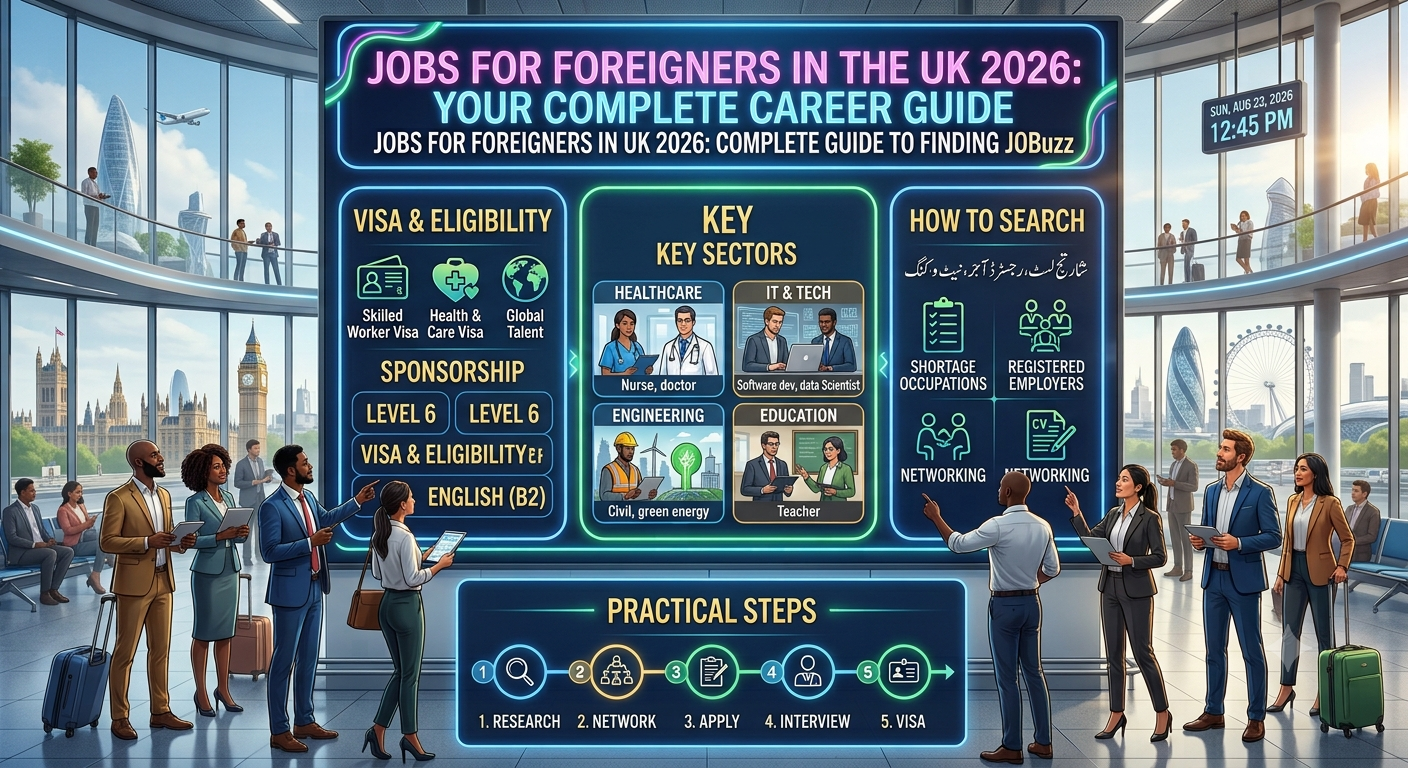
Jobs for Foreigners in UK 2026: Complete Guide to Finding Jobuzz as an International Worker pic bnao
Finding jobuzz for foreigners in UK can feel exciting at first, but the process can also be confusing. If you are living outside the United Kingdom and thinking about moving there for work, you may have questions about visas, employers, salaries, skills, applications, and where to find legitimate opportunities.
I understand why this topic attracts so much attention. The UK has a large labour market, internationally recognised companies, universities, hospitals, care organisations, technology businesses, construction firms, hotels, restaurants, and many other employers. But getting permission to work is just as important as finding a vacancy.
The good news is that foreign workers can potentially find UK work opportunities when they meet the relevant immigration and employment requirements. The important part is knowing which routes may apply to you and avoiding websites or agents that promise guaranteed employment.
This guide explains jobuzz for foreigners in UK, popular sectors, work visa considerations, application tips, common mistakes, and practical steps for international applicants.
What Are Jobuzz for Foreigners in UK?
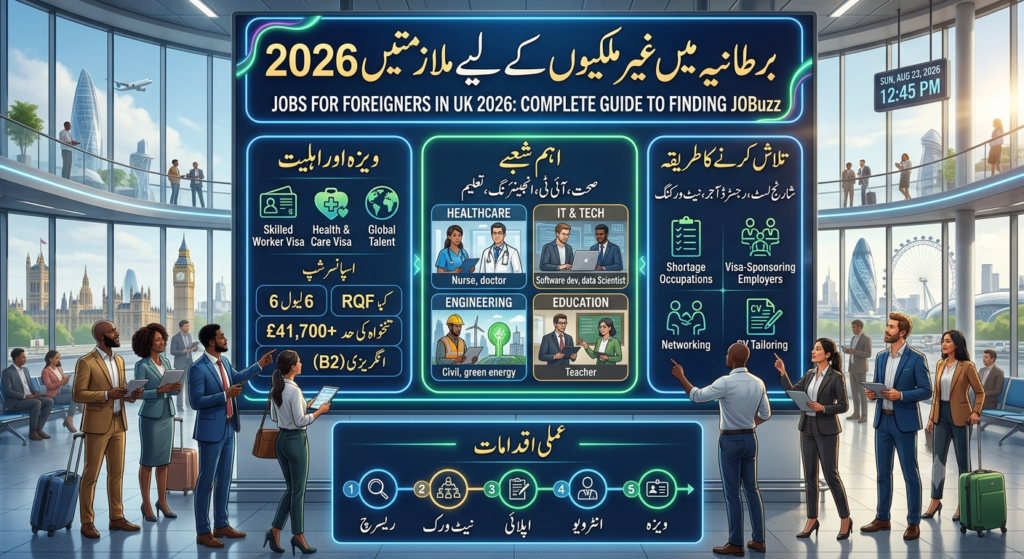
Jobuzz for foreigners in UK generally means employment opportunities available to people who are not British citizens or who do not already have unrestricted permission to work in the country.
However, being qualified for a position does not automatically mean you can legally work in the UK.
Your immigration status matters.
Depending on your circumstances, you may already have the right to work in the UK, or you may need an appropriate visa or immigration route before starting employment.
For someone applying from abroad, this means there are usually two separate questions:
- Can I perform the work?
- Do I have permission to do the work in the UK?
Both need to be considered before accepting an offer.
Can Foreigners Work in the UK?
Yes, foreign nationals can work in the UK if they have the appropriate right to work.
The exact rules depend on your nationality, immigration status, type of employment, salary, occupation, and other circumstances.
For many people applying from overseas, the Skilled Worker route is one of the important immigration routes to research. It is designed for eligible workers who have a qualifying job with an approved UK employer and meet the relevant requirements.
There are also other immigration routes for specific circumstances, including certain health and care workers, students, graduates, and people with family or other immigration connections.
Because immigration rules can change, applicants should always check the latest requirements through official UK government information before making financial or travel decisions.
Popular Jobuzz for Foreigners in UK
The UK has opportunities across many sectors, but not every position is suitable for overseas applicants.
Your chances can depend on your qualifications, experience, English ability, occupation, salary level, and whether an employer is able to sponsor international workers where sponsorship is required.
Here are some areas that international applicants commonly research.
1. Healthcare and Medical Careers
Healthcare is one of the sectors that attracts many international professionals.
Potential roles can include qualified nurses, doctors, allied health professionals, and other healthcare occupations.
However, regulated healthcare professions can require professional registration, recognised qualifications, examinations, or other requirements.
A foreign qualification should not automatically be assumed to be accepted in the UK.
2. Care Work
Care-related employment has also attracted international applicants.
Roles may involve supporting elderly people, people with disabilities, or individuals who need assistance with everyday activities.
Applicants should be particularly careful when researching care-related opportunities because immigration rules and eligibility requirements can change.
Never pay an unknown person simply because they claim they can guarantee you a sponsored position.
3. Information Technology
The UK’s technology sector includes opportunities in areas such as:
- Software development
- Cybersecurity
- Data analysis
- Cloud computing
- IT support
- Artificial intelligence
- Software engineering
- Network administration
Technology professionals with strong technical skills may find opportunities with companies that recruit internationally.
A strong CV and demonstrable experience can be particularly useful in this sector.
4. Engineering
Engineering is another area worth researching.
Depending on your specialisation, opportunities may exist in civil engineering, mechanical engineering, electrical engineering, manufacturing, energy, and other technical fields.
International engineers should check whether their specific profession requires UK recognition or registration.
5. Construction
The UK construction sector employs people in a wide range of occupations.
Potential roles can include skilled trades, site-related positions, engineering roles, project management, and technical positions.
However, immigration eligibility varies significantly by occupation, so never assume that every construction position qualifies for sponsorship.
6. Hospitality and Tourism
Hotels, restaurants, tourism businesses, and hospitality companies employ people in many different roles.
Examples include:
- Chefs
- Kitchen staff
- Hotel staff
- Restaurant staff
- Supervisory positions
- Hospitality management
Whether a specific role can be filled by someone requiring immigration permission depends on current UK rules and the position itself.
Jobuzz for Foreigners in UK: Quick Comparison
| Sector | Possible Roles | Experience Usually Helpful | Sponsorship Potential |
|---|---|---|---|
| Healthcare | Nurses, doctors, healthcare professionals | High | Depends on role |
| Technology | Developers, analysts, IT specialists | Medium–High | Depends on employer and role |
| Engineering | Engineers, technical specialists | Medium–High | Depends on role |
| Construction | Technical and skilled positions | Medium | Depends on occupation |
| Hospitality | Chefs, management, hospitality roles | Varies | Depends on occupation |
| Education | Teachers and specialists | High | Depends on role |
This table is only a starting point. Sponsorship eligibility should always be checked against the latest official requirements.
What Is a Skilled Worker Visa?
The Skilled Worker route allows eligible foreign workers to work for an approved UK employer in an eligible occupation, provided they satisfy the relevant requirements.
Generally, applicants need a qualifying job offer and must meet requirements relating to areas such as salary, occupation, English language ability, and sponsorship.
The exact rules can change.
That is why an article, social media post, or recruitment advertisement from several years ago should not be treated as current immigration advice.
Before applying, check the latest information on the official UK government website.
How to Find Jobuzz for Foreigners in UK
Searching randomly on social media is rarely the best strategy.
A more organised approach can save time.
Step 1: Identify Your Occupation
Start by asking yourself what you are actually qualified to do.
For example:
- Registered nurse
- Software developer
- Engineer
- Teacher
- Chef
- Accountant
- Data analyst
- Skilled technician
Be specific.
“Anything available” is not a professional career strategy.
Step 2: Check Whether Your Occupation Is Eligible
Before applying to hundreds of vacancies, research whether your occupation can potentially qualify under the relevant UK immigration route.
This can prevent wasted time.
Remember that an occupation being advertised online does not automatically mean it is available for overseas sponsorship.
Step 3: Research Employers
Look for reputable companies and organisations.
If sponsorship is relevant to your route, check whether the employer is authorised to sponsor workers where required.
Do not rely solely on a Facebook post or WhatsApp message.
Step 4: Prepare a UK-Style CV
Your CV should be clear and easy to read.
Usually include:
- Full name
- Contact details
- Professional summary
- Employment history
- Education
- Relevant skills
- Certifications
- Professional registrations where applicable
Avoid filling your CV with irrelevant information.
Focus on achievements and responsibilities that match the position.
Step 5: Write a Relevant Cover Letter
A cover letter should not simply repeat your CV.
Explain why you are interested in the position and how your experience fits the employer’s needs.
Keep it professional and relatively concise.
Step 6: Apply Through Reliable Channels
Use reputable recruitment websites, employer career pages, and official resources.
When possible, apply directly to the company.
This reduces the chance of dealing with someone falsely claiming to represent an employer.
What Documents May Foreign Applicants Need?
The exact documents depend on the job and immigration route, but applicants may need things such as:
- Valid passport
- CV
- Educational certificates
- Professional qualifications
- Employment references
- English-language evidence where required
- Professional registration evidence where relevant
- Job offer information
- Sponsorship information where applicable
Do not send sensitive documents to random people online.
Before sharing personal information, confirm who you are dealing with.
How Much Can Foreign Workers Earn?
Salary varies enormously across occupations.
A senior software engineer and an entry-level hospitality worker will obviously have very different salaries.
Income can depend on:
- Occupation
- Qualifications
- Experience
- Location
- Employer
- Working hours
- Industry
- Seniority
London and some other major cities can also have different living costs compared with other parts of the UK.
Do not choose a position only because the advertised salary looks attractive.
Consider rent, transport, food, taxes, utilities, and other everyday expenses.
A lower salary in a less expensive area may sometimes provide a different overall financial situation than a higher salary in an expensive city.
Real-World Example: An International Applicant
Imagine a qualified IT professional from Pakistan who wants to work in the UK.
Instead of paying an agent to “guarantee” a UK position, the applicant first checks which occupations and immigration routes may apply.
They then:
- Update their CV.
- Build a professional LinkedIn profile.
- Research relevant employers.
- Check sponsorship information.
- Apply for suitable technical positions.
- Prepare for online interviews.
- Verify the employer before accepting an offer.
- Follow the official immigration process if selected.
The applicant may not receive an offer immediately.
That is normal.
A better strategy is to treat the search as a professional recruitment process rather than a lottery.
How to Avoid UK Job Scams
This is one of the most important sections for international applicants.
People searching for jobuzz for foreigners in UK can become targets for fake recruiters because scammers know that overseas applicants are often desperate for sponsorship.
Be cautious if someone:
- Guarantees a visa
- Guarantees a UK position
- Demands a large payment before an interview
- Refuses to provide verifiable company information
- Uses only WhatsApp or social media
- Offers an unusually high salary for little work
- Pressures you to send money quickly
- Requests unusual payment methods
- Sends fake-looking documents
- Claims they can “bypass” UK immigration requirements
A legitimate employer does not need to make unrealistic promises.
If you are unsure, stop and verify.
Pros and Cons of Working in the UK as a Foreigner
Advantages
International experience: UK work experience can be valuable for some professional careers.
Professional development: Many industries offer opportunities to develop specialist skills.
Diverse workplaces: International employees may work alongside people from many backgrounds.
Career exposure: Working in a different labour market can broaden your professional experience.
Potential long-term opportunities: Depending on your immigration route, employment circumstances may contribute to longer-term career planning.
Disadvantages
Visa requirements: Immigration rules can be complicated.
Relocation costs: Moving countries can require significant planning and money.
High living costs: Some UK locations are expensive.
Competition: You may compete with both local and international applicants.
Adjustment period: Work culture, weather, transport, housing, and communication styles may be different from what you are used to.
Understanding these points before moving can make the transition easier.
Tips for Foreign Applicants
If you are seriously considering jobuzz for foreigners in UK, preparation can make a big difference.
Improve Your English
You do not necessarily need perfect English, but clear communication is important for most professional environments.
Practice interviews, workplace vocabulary, and professional writing.
Research the Employer
Do not apply blindly.
Learn what the company does, what position it is offering, and what skills it expects.
Build a Strong LinkedIn Profile
Recruiters often check professional profiles.
Use a professional photo, accurate employment history, relevant skills, and a clear headline.
Do Not Lie on Your CV
Never invent qualifications or work experience.
A false claim may create much bigger problems later.
Be Patient
The overseas recruitment process can take time.
You may need to submit many applications before receiving interviews.
That does not mean the process is impossible.
Step-by-Step Plan for Getting Started
Here is a simple roadmap.
Step 1: Identify your strongest professional skill.
Step 2: Research UK occupations related to your experience.
Step 3: Check current immigration requirements.
Step 4: Prepare your CV and professional profile.
Step 5: Research potential employers.
Step 6: Confirm whether sponsorship is relevant and available.
Step 7: Apply for suitable vacancies.
Step 8: Prepare for interviews.
Step 9: Verify any employment offer carefully.
Step 10: Follow the official immigration process.
Do not skip the verification stage simply because you are excited about an offer.
Frequently Asked Questions
1. Can foreigners get jobuzz in the UK?
Yes, foreign nationals can work in the UK if they have the appropriate right to work and meet the requirements of the relevant immigration route. Eligibility depends on individual circumstances.
2. Which jobuzz are popular among foreign workers?
Healthcare, technology, engineering, education, construction, and some other sectors attract international applicants. However, the availability of sponsorship depends on the occupation, employer, and current immigration rules.
3. Do all UK employers sponsor foreigners?
No. Not every employer is authorised or willing to sponsor international workers. If sponsorship is required, applicants should verify the employer’s status and the role’s eligibility.
4. Can I apply for UK jobuzz while living outside the country?
Yes. Many employers accept applications from international candidates. However, whether you can actually take up the position depends on your right to work and applicable immigration requirements.
5. Should I pay an agent to guarantee a UK job?
Be extremely cautious. Nobody should be able to guarantee that you will receive a UK job or visa simply because you pay them. Always verify employers, recruiters, immigration requirements, and payment requests before proceeding.
Final Thoughts
Finding jobuzz for foreigners in UK can be a realistic career goal, but it requires proper preparation.
The most important thing is to stop thinking about the UK as simply a destination where you can find any available position. Instead, think about the process as building a professional case for why a UK employer should hire you.
Choose an occupation that matches your real skills. Improve your CV. Research employers. Check current immigration requirements. Apply through reliable channels and stay alert for scams.
Most importantly, never let an agent’s promise replace your own research.
For international applicants, the best approach is simple: build a valuable skill, understand the rules, target suitable employers, and be patient.
If you are planning your UK career in 2026, start today by identifying your strongest skill and researching the current requirements for your occupation. A well-prepared application is far more powerful than a rushed one.
The UK may offer exciting professional opportunities, but getting there should be based on accurate information, genuine qualifications, and a realistic plan—not promises of instant success.